Thursday, 12 June 2014

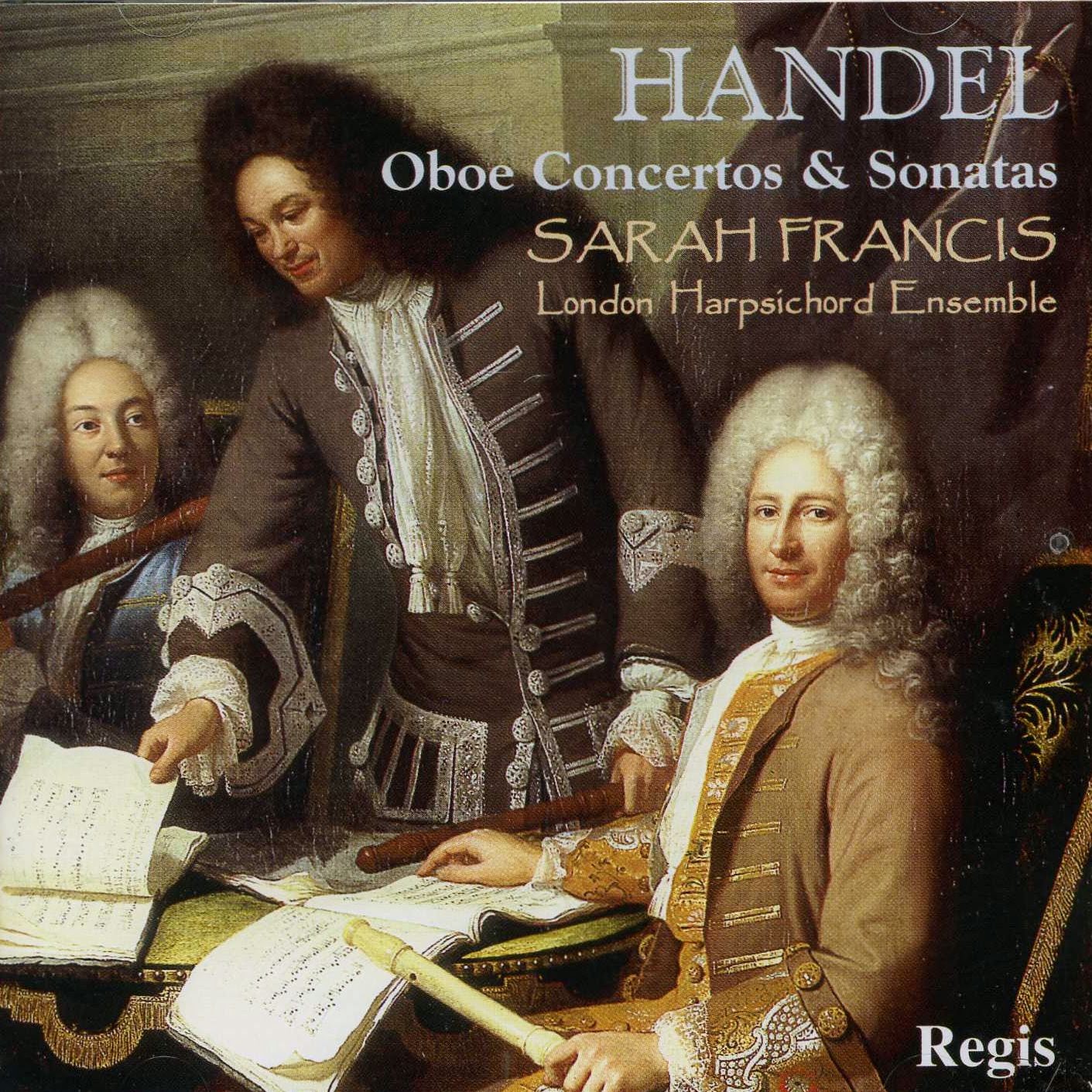
Oboe Concertos and Sonatas - Handel

Here is all Handel’s music for solo oboe – three concertos, four sonatas, and one recently discovered in-between piece scored for oboe, two violins and continuo. Handel writes for the instrument sympathetically, especially in the slow movements. Sarah Francis has an appealing way with these, though her tone can tend towards the fulsome. If the music is sometimes undercharacterised, the ensemble’s playing is nevertheless neat. Forward sound.                                   George Hall 

Enjoy :)

Wednesday, 11 June 2014

Der Liebreiche und Geduldige David - Mattheson

Dear Friends, here another masterpiece by one of the most renown baroque masters, Johann Mattheson, friendly attached to Telemann and at some point, rival to Haendel.

Enjoy Greatly :)

Dwnload

Monday, 9 June 2014

Oster Oratorium BWV 249 BWV 66 -Cantata BWV 56 and BWV 200 -- Bach

Two interpretations, two different epoques, two styles, two different sounds and one masterpiece (Bach Oster Oratorium BWV 249).

Enjoy :)

DWNLOAD


 Enjoy :)

DWNLOAD


More info

Saturday, 7 June 2014

Die Geburt Jesu Christi - Hertel


Johann Wilhelm Hertel (1727-1789)
 
Christmas Oratorio  "Die Geburt Jesu Christi"
Kölner Akademie, Michael Willens

 Dep: Part1
Upl: Part1

Enjoy!

Sunday, 1 June 2014

Orpheus - Telemann

The mythological tale "Orpheus" set to music by many composers, between them are: Peri, Caccini, Monteverdi of course, Lully, Telemann, Gluck, etc. as the more famous and more studied among musicologists. 
The rediscovery of this masterpiece  placed a landmark regarding Telemann's operatic output, and this recording directed by Renè Jacobs is between his finest.

Enjoy :)

Option1     Option2
Part1         Part1
Part2         Part2
Part3

Saturday, 31 May 2014

Six Concertos - Telemann

Here Six concertos that appeared also in my last post (Telemann's Concerts and Suites). 

You may say that in fact are Sonatas, and in fact they are since there is no tutti (orchestral) part that contrast and imitates the solo parts, in this case the flute that goes along the harpsichord in which both are in the same status. 

I found this interpretation higher in sound quality and in performing, flawless and more lively in comparison with the interpretation of camerata koln of my last post. Take a look (sound look indeed) to both posts and judge by yourself..

Enjoy :)

Option1     Option2

Friday, 30 May 2014

Concerts and Suites - Telemann


Sublime music that always one expect from a genius of the gauge of Telemann, a musician that mastered maybe everything on the field of his time, a very special time by the way, because it was the time in which baroque attained its pick, and when the galant style started to gain force, but telemann always was an step in advance.

"Thanks to the original releaser"

Enjoy  :)

Option1     Option2
Part1         Part1
Part2         Part2
Part3

Wednesday, 28 May 2014

Venus and Adonis - Handel

Very enchanting interpretations of the Handel's sonatas op. 2 HWV 388, 390a, 392 and 393; the cantata "Mi palpita il cor" HWV 132b and the air "Meine seele Hort im Sehen" HWV 207; whose softness and clarity give a parallel view alike from other recordings.

Special mention must be done to the first world recording "Venus and Adonis" and the great work that sure it was its reconstruction carried out by Luca Guglielmi. Although the voice part was extent, wasn't the most part of the instrumental passages and likewise were the recitatives, but at the end his work resulted exceptional

"Thanks to the original releaser"

Enjoy  :)

Option1     Option2

Tuesday, 6 May 2014

Arianna - Marcello

‘Arianna’ was first performed in Venice, in the winter of 1726, when Marcello had turned forty and was at the height of his fame. He had just published his ‘L’estro poetico-armonico’, and enjoyed the success in Vienna of a eulogising serenata commissioned for the birthday of the emperor Charles VI.

Marcello was a high-born amateur musician, who had a clear competitive streak in him, he wanted to shine in everything that he did, particularly in the field of music and against the professional musicians with whom he felt he was competing. His ‘Canzoni madrigalesche’, for example, were written with the objective of perfecting the style of Antonio Lotti’s ‘Duetti’, and the title of his own magnum opus (‘L’estro poetico-armonico’) not only recalls, but also goes one better than, Antonio Vivaldi’s Op. 3 (‘L’estro armonico’). It is striking that in the year following his important Viennese commission coincidences can be observed which link his most important works to events that occurred in the Austrian capital. In 1726 Antonio Caldara’s oratorio ‘Joaz’ had been performed at court, and at almost the same time Marcello set the same text.

‘Arianna’ is almost contemporary with ‘Joaz’, and here too the subject is identical to a stage play performed in Vienna the same year, ‘La corona d’Arianna’, with music by the court Kapell-meister Johann Joseph Fux. It was typical of eighteenth-century librettists to insert a wealth of references to contemporary life which frequently resulted in the accretion of many layers of motifs around a single dramatic nucleus, enriching it to the extent that the survival of the work was guaranteed despite the changes in public taste and that of the commissioning patrons.

Enjoy  :)

Option1     Option2
Part1          Part1
Part2          Part2

Friday, 2 May 2014

Cantate da Camera - Domenico Scarlatti

Hi! my friends. All this time I've been too busy, an state that have impeded me to post some wonderful cd's that I want you to know.

Now it is the turn of Domenico Scarlatti, a very prolific composer that composed mainly for the harpschord, his favorite instrument. He also traveled through the cantata genre, a genre that attained its climax in the final stages of his father's life, Alessandro Scarlatti. Domenico composed about sixty cantatas (not at all inconsiderable number) even though his father composed more than 10 times more than him. 

Domenico Scarlatti had nothing to envy others composers since his skillfulness for writing music was unique. In particular, his cantatas have not much to do with the antique stile in which the bass continuo parts were very contrapunctual. In another hand,they  have very little to do with the classical stile also, since the violins and vocal parts are merely harmonious rather than melodious. But at any rate, we all now how big his Domenico's Scarlatti print in music and in his developing.


Enjoy   :)

Option1      Option2
Part1
Part2